
General Cell Lines and Cell Cultures


ATCC Niallia circulans
Niallia circulans strain AMC 732 is a quality control strain that is included in the bioMerieux VITEK 2 - Bacillus (BCL) Card Quality Control Organism Set.


ATCC Staphylococcus saprophyticus
Staphylococcus saprophyticus strain Vitek #8935 [API 88-06-124, NSB 3364] is a whole-genome sequenced bacterium that can be used in quality control.

ATCC Haemophilus influenzae
Haemophilus influenzae strain AmMS 120 is a whole-genome sequenced clinical isolate that can be used in respiratory disease research or as a quality control strain for MicroScan products.
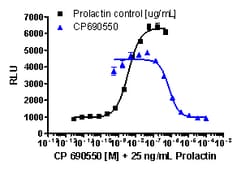
Eurofins Discoverx PathHunter U2OS JAK3 Activity Assay, 2 vials. (93-0796C3)
The PathHunter U2OS JAK3 Activity Assay is a stable, engineered cell line for use in studying small molecule drug candidates targeting the JAK3 kinase domain. The cell line is engineered to express the catalytic domain from JAK3 fused to the cytokine receptor binding domain (CRBD) of JAK2. The cells co-express an Enzyme Acceptor (EA) tagged SH2 domain and a ProLink (PK) tagged Cytokine receptor. The CRBD is designed to bind the CTK catalytic domain to the PRLR-PK. Activation of the PRLR-PK induces receptor phosphorylation by the JAK3 catalytic domain. This leads to SH2-EA recruitment and production of EFC signal. This stable modified cell line is provided as two vials of cryopreserved cells. For detailed product information, User Manual and datasheet, visit www.discoverx.com/kinases.

Eurofins Discoverx ChemiScreen CRTH2/DP2 Prostanoid Receptor Membrane Preparation, 1 vial. (HTS031M)
The ChemiScreen CRTH2/DP2 Prostanoid Receptor Membrane Preparation is derived from proprietary stable recombinant cells to ensure high levels of PTGDR2 surface expression. ChemiScreen membrane preps can be used to screen for ligand binding affinities using a competitive radio-labeled ligand approach or to screen for GPCR activity using GTPγS assays. Increased binding affinities or GPCR activation levels will lead to higher radioactive signal. Membrane preps contain 1 mL of 1 mg/mL frozen membranes derived from a stably modified clonal cell line which was chosen for optimal receptor expression. For detailed product information, visit www.discoverx.com/membranepreps.

ATCC Priestia megaterium; 6 x 0.3mL
ATCC 14581-MINI-PACK™ consists of 6 ready-to-use vials of ATCC 14581™ frozen in 200 μL of glycerol stock, eliminating the need to rehydrate and culture the strain prior to use. Each vial is provided with a 2-D barcode for easy storage and tracking, as well as peel-off labels for fast and reliable recordkeeping.

ATCC SCC-25; Tongue Carcinoma; Human (Homo sapiens)
SCC-25 is an epithelial-like cell that was isolated from the tongue of a 70-year-old, male patient with squamous cell carcinoma. This cell line was deposited by JG Rheinwald and can be used in toxicology and cancer research.

Biochain Institute Inc Paraffin Tissue Section - Human Adult Normal: Brain: Medulla Oblongata, 5 slides/PK
BioChain's tissue products are based on the sample repository network established following the IRB-approved ethical standard and procedures. BioChain's formalin fixed paraffin embedded (FFPE) tissue section line encompasses a large selection of tissue sections which are suitable for immunohistochemistry and in situ hybridization assays. The tissue sections are approximately 5 um thick. For those customers who want to perform FFPE DNA and RNA isolation, BioChain can provide tissue section slices in tubes instead of mounting them on glass slides.

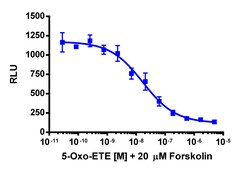
Eurofins Discoverx cAMP Hunter CHO-K1 OXER1 Gi Cell Line, 2 vials. (95-0089C2)
The cAMP Hunter OXER1 Gi cell line is a stable, engineered cell line for use in studying drug candidates (small molecules or biologics) targeting GPCRs. This cell line enables assessment of ligand (e.g. 5-oxo-ETE) based activation of OXER1 GPCR activity via detection of decreasing levels of intracellular cAMP. This product uses EFC technology. The cells overexpress wild type OXER1, a naturally Gi/Go coupled GPCR. Upon activation of OXER1, the decrease in levels of intracellular cAMP leads to a decreased signal from EFC when the cAMP detection kit is applied. This stable modified cell line is provided as two vials of cryopreserved cells. For detailed product information, User Manual and datasheet, visit www.discoverx.com/gpcr.

Amsbio LLC JURKAT FFPE Cell Pellet Slide (5-pack)

FFPE cell line sections are manufactured using a proprietary technology that maintains both cell morphology and preserves nucleic acids and proteins. Available from over 120 tumor cell lines, these FFPE sections make for affordable and consistent controls without compromising quality or consistency. Using cell line controls overcomes issues experienced with traditional cell or tissue-based control specimens such as intra specimen variation, lot-to-lot variations and inconsistent biomolecule quality. Also available in scroll & block formats - please enquire.

ACROBiosystems CHO/Human CEACAM5 Stable Cell Line Development Service
Carcinoembryonic antigen-related cell adhesion molecule 5 (CEACAM5) is also Carcinoembryonic antigen (CEA), Meconium antigen 100, CD antigen CD66e, CEACAM5 belongs to the immunoglobulin superfamily and CEA family. CEACAM5 contains seven Ig-like (immunoglobulin-like) domains. CEACAM5 is homodimer protein which binding of E.coli Dr adhesins leads to dissociation of the homodimer. CEACAM5 is cell surface glycoprotein that plays a role in cell adhesion and in intracellular signaling. CEACAM5 is receptor for E.coli Dr adhesins.

Lonza Walkersville Mouse C57 Brain Striatum Neuro
Ready-to-use Clonetics Mouse C57 Brain Striatum Neurons (M-CP-302) are isolated from mouse C57 black brain (E14 15) These are sold as cell suspensions of high quality primary embryonic brain neuronal cells (including glia) prepared by standardized methods and are ready for immediate culture Each vial of striatum cells contains approximately 4 million viable cells This will seed into 6 or more wells of a 24-well plate and 30 or more wells of a 96-well plate using the recommended plating densities and medium After approximately 4 days in culture the cells will form a neurite network and by the 7th day debris will be minimal Recommended medium PNGM BulletKit (CC-4461)

Biochain Institute Inc Paraffin Tissue Section - Progressive Supranuclear Palsy: Brain: Cerebellum, 5 slides/PK
BioChain's tissue products are based on the sample repository network established following the IRB-approved ethical standard and procedures. BioChain's formalin fixed paraffin embedded (FFPE) tissue section line encompasses a large selection of tissue sections which are suitable for immunohistochemistry and in situ hybridization assays. The tissue sections are approximately 5 um thick. Each slide contains tissue from single human diseased sample. Documentation of tissues' clinical histories may be available upon request. For those customers who want to perform FFPE DNA and RNA isolation, BioChain can provide tissue section slices in tubes instead of mounting them on glass slides.

ATCC Salmonella enterica; subspecies enterica; serovar Typhimurium; Strain: SAP17-7699
Salmonella enterica subsp. enterica serovar Typhimurium strain SAP17-7699 was isolated from human feces in the United States. It has applications in food testing, enteric disease research, and zoonotic disease research.
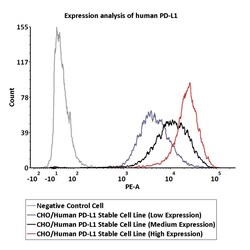
ACROBiosystems CHO/Human PD-L1 Stable Cell Line (High Expression) Development Service
Programmed cell death 1 ligand 1 (PDL1) is also known as B7-H, B7H1, MGC142294, MGC142296, PD-L1, PDCD1L1 and PDCD1LG1,which is a member of the growing B7 family of immune molecules and is involved in the regulation of cellular and humoral immune responses.PDL1 is a cell surface immunoglobulin superfamily with two Ig-like domains within the extracellular region and a short cytoplasmic domain. This protein is broadly expressed in the majority of peripheral tissues as well as hematopoietic cells. Interaction between PDL1 and its receptors belonging to the CD28 family of molecules provide both stimulatory and inhibitory signals in regulating T cell activation and tolerance. PDL1 may inhibit ongoing T-cell responses by inducing apoptosis and arresting cell-cycle progression.